October 14, 2026 · 4 min read
Whoever Owns AI Answers Owns the Future of Marketing
Every era of marketing had a gatekeeper. Today it's the AI answer. Why the brands that show up in ChatGPT and Gemini will win the next decade.
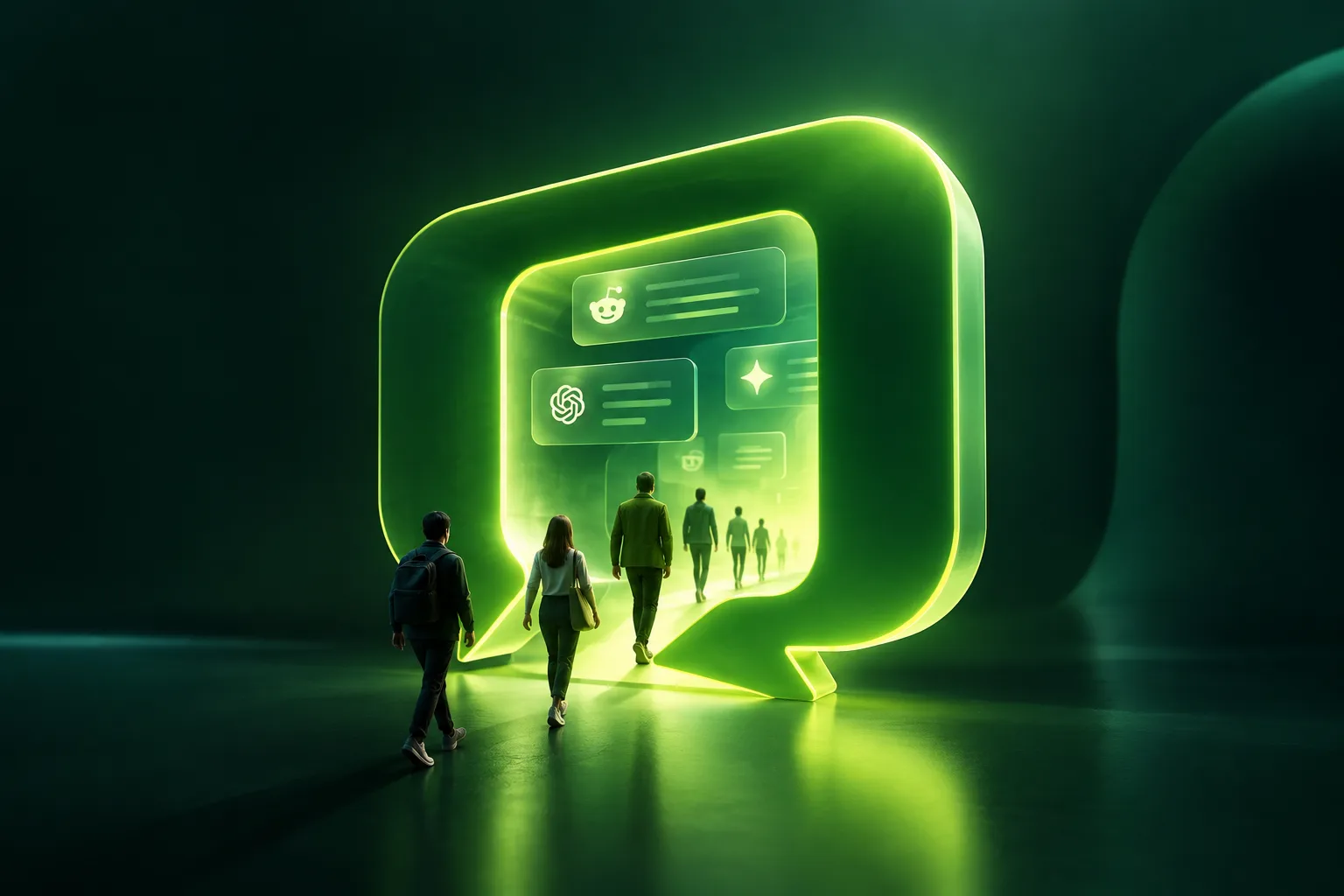
Every era of marketing has had a gatekeeper. The businesses that understood it won, and the ones that ignored it slowly faded.
For a long time it was the Yellow Pages. If you weren't listed, or your ad was smaller than your competitor's, the phone didn't ring. Then it was Google. The companies that figured out search early built empires on free traffic. Then came social feeds, and a new wave of brands grew by understanding how Instagram and TikTok decided what people saw.
I believe the next gatekeeper is already here. It's the AI answer. The brands that show up consistently in those answers will own the next decade of marketing.
From searching to asking
The change is simple to describe. People used to search. Now more and more of them ask.
Searching meant scanning results and deciding for yourself. Asking means handing that job to ChatGPT, Gemini, Perplexity or Google's AI Overviews and getting a recommendation back. The tool does the comparing. The buyer just picks from what it suggests.
That moves a lot of power. Whoever appears in the answer gets the attention. Whoever doesn't never even gets considered.
Why this gatekeeper is stronger than the last ones
An AI answer combines things no earlier channel had all at once.
It's short. A results page has ten links and a stack of ads. An AI answer might name three brands.
It's trusted. People read AI answers as advice, not advertising. There's no "sponsored" label making them skeptical.
It's a conversation. The buyer asks follow up questions and the AI keeps guiding them. If you're mentioned early, you tend to stay in the conversation.
And it's everywhere. It's built into search engines, phones, browsers and work tools. People will meet AI answers whether they go looking for them or not.
What "owning" AI answers really means
I want to be honest here, because there's a lot of hype around this. Nobody controls ChatGPT. You can't pay OpenAI or Google to be recommended in an organic answer, and anyone promising that is selling something that doesn't exist.
What you can do is become the brand the internet talks about. AI tools build their recommendations from what they read: Reddit threads, review sites, comparison articles, news and your own website. When your brand shows up in those places often, described clearly by people who actually used it, the tools start to repeat it. That's the closest thing to owning the answer, and it's earned, not bought.
Who wins and who falls behind
The winners will be the brands that build presence now, while most competitors still focus only on ads and classic SEO. Early mentions compound. The more a brand gets recommended, the more people discuss it, and the more material the AI has for its next answer.
The brands that fall behind will be the ones waiting for the channel to "mature." By then the short list in every category will already have names on it, and pushing your way in will cost far more.
What I'd do if I were running a brand today
I'd ask the main AI tools the ten questions my customers ask most and see who gets named. I'd find the communities and review sites where my category is discussed and start showing up there honestly. I'd make my website crystal clear about what I do and who I do it for. And I'd check again every month.
That's the playbook we run for clients at Sublime Plus, and it's the same one we run for Sublime itself. For a closer look at how this differs from classic search, read SEO vs LLM optimization. If you want to see what it looks like for your brand, start at sublime-plus.com.
Want this run on your brand?
We will walk you through what the models currently say about you, and what it would take to change it.